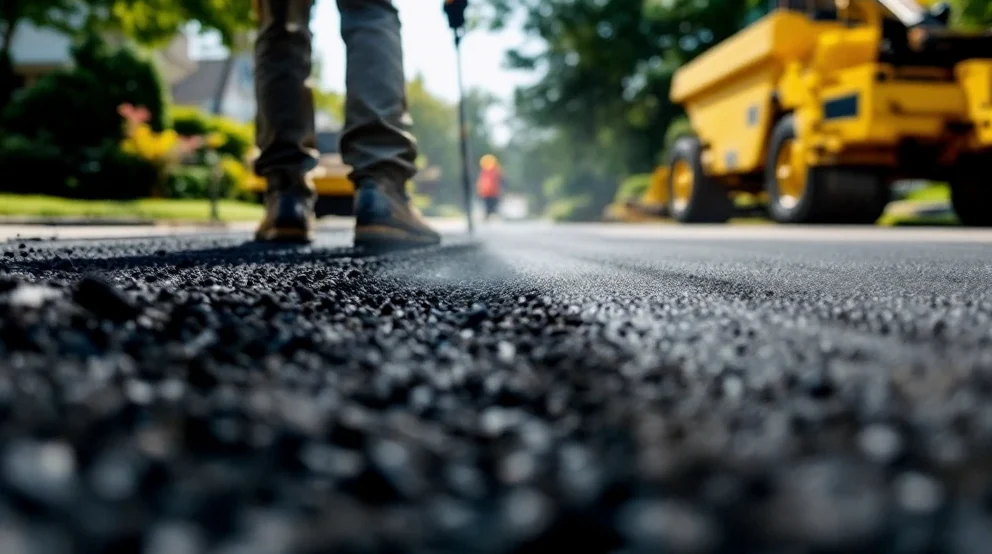
What is Asphalt Paving and how does it work?
Asphalt paving is laying a hot mix of stone, sand, and liquid asphalt over a compacted base to create a smooth, durable driveway. It's the most common paving material for homes in Huntsville because it handles our heat and freeze-thaw cycles well.
You see it on roads and parking lots, but for a home driveway, asphalt is a practical choice. The mix is heated to around 300 degrees, spread, and then rolled while it's still hot. That's what gives it that smooth, dark surface. Once it cools, it hardens into a tough layer that can last 20 years or more with basic care.
The key is what's underneath. The base, usually crushed stone, has to be thick and compacted properly. If the base is weak or uneven, the asphalt will crack and sink no matter how good the top layer looks. That's why a cheap quote often means a thin base, and a thin base means trouble down the road.
In Huntsville, our clay soil shifts with moisture, so base prep matters even more. A crew that doesn't compact the base is setting you up for a wavy driveway within a couple of years.
You might hear the term 'hot mix asphalt' or 'HMA.' That's the standard stuff. There's also cold mix, but that's for temporary patches, not a whole driveway.
So when you hire for asphalt paving, you're paying for more than the blacktop. You're paying for the base, the drainage, and the labor to get it right.
- Hot mix is laid and compacted while warm, then cools into a solid surface.
- A proper base of crushed stone is what keeps the asphalt from cracking or sinking.
- Clay soil in Huntsville means base prep is critical to avoid shifting.
- Cold mix is only for temporary fixes, not full driveways.
Short version
- Asphalt is a durable, cost-effective driveway material when installed correctly.
- Your base layer is more important than the surface you see.
- Expect to pay in the range of $2,112 to $6,336 for a typical Huntsville driveway. (projectcostatlas.com)
- Always get a free on-site quote for an exact price.
How Asphalt Paving works, start to finish
A typical asphalt paving job takes one to three days, depending on the size and condition of your driveway. The crew removes the old surface if needed, preps and compacts the base, then lays and rolls the hot mix.
First, we assess the site. We look at drainage, the condition of the existing driveway, and how much base is already there. If your driveway is cracked and crumbling, we'll tear it out. If it's just tired, we might overlay it, but that only works if the base is solid.
Next is excavation. We dig out the old material and any soft spots. Then we bring in crushed stone for the base, usually 4 to 6 inches for a residential driveway, and compact it with a roller. This is the step that separates a smooth driveway from a bumpy one.
After the base is set, we lay the asphalt. The hot mix comes from a local plant in a dump truck, and we spread it with a paver or by hand if it's a tight space. Then we roll it. The rolling is what pushes the stones together and squeezes out the air, making the surface dense and water-resistant.
The new asphalt needs time to cool and cure. You can usually walk on it the next day, but we recommend parking cars on it after 48 to 72 hours. Full curing takes a few weeks, and during that time, the surface can be soft in hot weather.
One thing homeowners often miss: the edges. The edges of the driveway need to be compacted and sloped so water runs off. If water pools at the edge, it'll undermine the base over time.
We also check the drainage. A driveway that slopes toward the house is a recipe for basement problems. We grade the base to direct water away, usually toward the street or a swale.
Finally, we clean up. That means hauling away old asphalt and debris, not just pushing it to the side. Some outfits blow the leaves out and haul nothing away; we leave the site tidy.
- Site assessment.We check the current driveway, soil, and drainage to plan the job.
- Excavation and base prep.Old material is removed, and crushed stone is laid and compacted to 4 to 6 inches.
- Laying the asphalt.Hot mix is spread and rolled while warm to create a dense, smooth surface.
- Curing.Wait 48 to 72 hours before parking on it, and a few weeks for full hardness.
Why Asphalt Paving matters for your home
Your driveway is the first thing people see, but more importantly, it protects your home from water damage and adds value. A well-paved driveway handles our heavy rains and hot summers without cracking or sinking.
In Huntsville, we get about 54 inches of rain a year, plus freeze-thaw cycles in winter. Asphalt is flexible enough to handle that, but only if it's installed right. A driveway that slopes toward the house can send water into your foundation. That's a costly fix we help you avoid.
A solid driveway also keeps your car's undercarriage clean and dry, and it gives you a stable surface for walking, especially if you have kids or older folks at home. Cracks and potholes are trip hazards, and they get worse every time water gets in and freezes.
From a resale standpoint, a smooth driveway is a big plus. Buyers notice it, and it signals that the home has been cared for. A crumbling driveway makes them wonder what else was neglected.
The average cost to pave a driveway is $4,897. (angi.com) That's a meaningful investment, so you want it done right the first time. Cutting corners on base prep might save a few hundred now, but it'll cost thousands in repairs later.
We've seen driveways fail within a year because the base wasn't compacted. The asphalt looks fine for a few months, then cracks appear along the edges, and water gets in. Before long, you have potholes.
Proper asphalt paving also improves drainage around your home. We grade the surface so water runs away, not toward the foundation. That's something you can't see after the job is done, but you'll feel it in a dry basement.
Hairline cracks
Small cracks are normal after a few years. Seal them early to keep water out.
Alligator cracking
A pattern of interconnected cracks means the base is failing. Plan for a replacement.
Potholes or sinking
These are a safety hazard and a sign of major base damage. Call us for an assessment.
Common problems and what causes them
Most asphalt driveway problems come from poor base preparation, water damage, or heavy loads. Cracks, potholes, and sinking are the usual culprits, and each has a specific cause you can spot early.
Cracks are the most common issue. They start small, often from tree roots, soil movement, or just age. If you ignore them, water seeps in, and freeze-thaw cycles make them wider. Sealing cracks early is cheap; replacing the driveway is not.
Potholes are a sign that the base has failed. When water gets under the asphalt and softens the base, the surface collapses under weight. A pothole isn't a surface problem; it's a base problem. Patching it without fixing the base is a temporary fix that'll fail again.
Sinking or settling happens when the base wasn't compacted enough, or when the soil underneath shifts. In Huntsville's clay, that's common if the crew didn't address drainage. You'll see a dip where water collects, and that's a magnet for more damage.
Another issue is edge raveling. That's when the edges crumble, usually because they weren't compacted properly or the driveway is too narrow and cars drive on the edge. We always compact the edges and recommend a width of at least 10 feet for a single car.
Oil and gas spills can soften the asphalt over time. It's not a structural issue, but it looks bad. We suggest cleaning spills promptly and using a drip pan if you park an older car.
Some homeowners make the mistake of sealing too soon. New asphalt needs to cure for at least 90 days before sealing. If you seal too early, you trap moisture and the surface can blister.
The best way to avoid these problems is to hire a crew that does the base work right. We've seen too many driveways fail because someone rushed the job. A free on-site quote from us will give you a clear picture of what your driveway needs.
Worth it when
- Your driveway has multiple cracks or potholes.
- Patching won't hold when the base is failing.
- You're selling your home and want to boost curb appeal.
- You want a long-term fix, not a temporary patch.
Hold off when
- Only a few years old, the driveway shows minor surface wear.
- You just need a sealcoat, not a full repave.
- Budget is tight and you can wait a year.
- Small cracks can be sealed for now.
Sources
Need asphalt paving in Huntsville? Get a free estimate today.
📞 256-472-9731