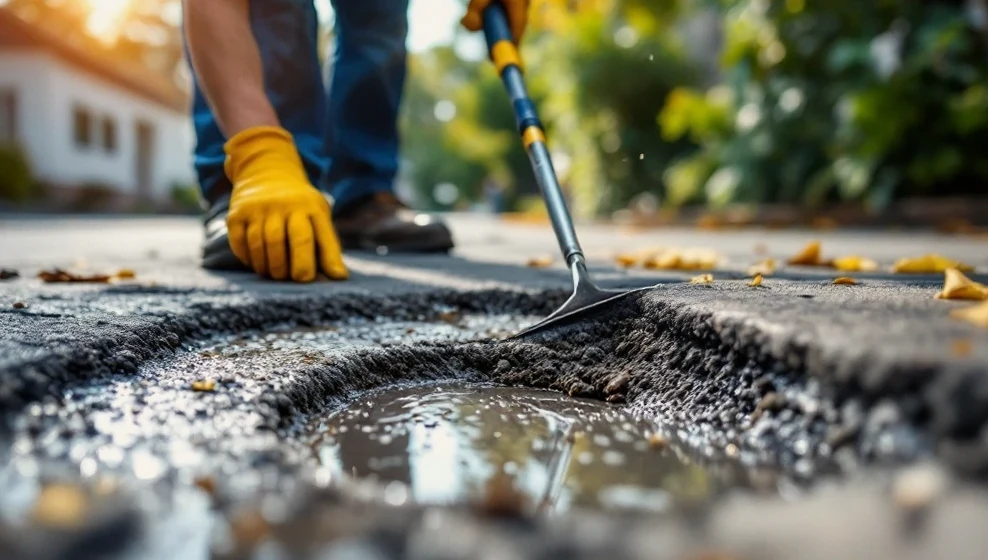
What is Pothole Repair & Patching and how does it work?
Pothole repair and patching is the process of removing damaged asphalt and replacing it with new material to restore a smooth, safe surface. It works by cutting out the weak area, cleaning the hole, applying a binder, and compacting fresh asphalt. The result is a patch that blends in and holds up.
Think of a pothole as a cavity in your driveway. If you just fill it with some cold mix from a hardware store, it's like putting a bandage on a toothache. The problem underneath is still there, and water will keep working its way in. A proper patch removes the bad asphalt, gets down to solid ground, and rebuilds the surface so it lasts.
For a typical pothole in a residential driveway, we cut out the damaged section in a clean rectangle or square. That straight edge gives the new patch something to bite into. Then we clear out any loose debris, water, or dirt. If the base is soft, we address that first, because patching over a weak base is just wasting your money.
We use hot mix asphalt for most repairs. It's the same material used on roads, and it compacts down to a dense, durable surface. After we place it, we compact it with a plate compactor or a roller, depending on the size. The goal is to get it level with the surrounding driveway so water sheds off instead of pooling.
A small pothole might take an hour or two. A larger one, or one that's been ignored for a while, could take half a day if the base needs work. The good news is that most repairs are done in a single visit, and you can drive on it within a day or two, depending on the weather.
- Patching means cutting out the damage, not just filling a hole.
- Hot mix asphalt is the standard for lasting repairs.
- Proper compaction is what keeps the patch from sinking later.
- Most residential potholes are fixed in one visit.
Short version
- Pothole repair removes damaged asphalt and replaces it with fresh, compacted material.
- A proper patch lasts years; a quick fill might not survive a single winter.
- Costs run $45 to $150 per hole, depending on size and depth. (tidyparking.com)
- Small patching can cost $2 to $5 per square foot. (tidyparking.com)
How Pothole Repair & Patching works, start to finish
The process starts with a thorough inspection to find the true extent of the damage. We then cut out the bad asphalt, clean the hole, repair the base if needed, apply a tack coat, fill with hot mix, and compact it. The final step is a sealant or edge seal to keep water out.
First, we look at the pothole and the area around it. If the edges are crumbling or there are cracks radiating out, we know the damage goes deeper than what you see. Sometimes a small hole hides a larger weak spot, so we probe the surrounding asphalt to find it.
Next, we cut the patch area with a saw or a pavement saw. This gives us clean, vertical edges. We cut back to solid asphalt, not just to the edge of the visible hole. If we didn't, the patch would eventually lose its edge and crumble again.
Once the cut is made, we remove the broken asphalt and any loose material. We use shovels, picks, and sometimes a small excavator for bigger jobs. The hole needs to be free of dust, dirt, and moisture before we put anything back in. If it's damp, we dry it out or use a blower to get it clean.
If the base underneath is soft or has washed out, we fix that first. That might mean adding crushed stone and compacting it. This step is what separates a patch that lasts from one that sinks within a year. Leaving it out is how some outfits get away with a cheaper price, but you'll pay for it later.
After the base is solid, we apply a tack coat, a thin layer of liquid asphalt that helps the new patch bond to the old surface. Then we place the hot mix asphalt, spreading it out and raking it to the right depth. We compact it with a plate compactor, working from the edges toward the middle to get a tight, even surface.
The last step is sealing the edges. We apply a bead of crack filler or sealant around the patch to keep water from seeping in along the seam. That's a detail that a lot of quick-patch crews overlook, and it's one of the reasons their work doesn't hold up.
- Inspect and mark.We find the full extent of the damage, including any hidden soft spots.
- Cut out the bad asphalt.A saw or pavement saw gives clean vertical edges.
- Clean and prep the hole.Remove all loose material and make sure the base is solid.
- Apply tack coat.A thin layer of liquid asphalt ensures the patch bonds to the old surface.
- Fill and compact.Hot mix asphalt is placed and compacted to match the surrounding level.
- Seal the edges.A bead of sealant keeps water out of the seam.
Why Pothole Repair & Patching matters for your home
A pothole is more than an eyesore. It can damage your vehicle, create a trip hazard, and let water undermine the base of your driveway. Ignoring it makes the repair more expensive later. Fixing it promptly protects your driveway and your property value.
Every time it rains, water seeps into a pothole and softens the base underneath. During a freeze-thaw cycle, that water expands and cracks the asphalt further. In Huntsville, we get plenty of both rain and freezing nights, so a small pothole can double in size over a single winter.
Your driveway is part of your home's curb appeal. A cratered driveway makes the whole property look neglected, and that matters if you ever put the house on the market. Property values can be affected by $0.15 to $0.30 per square foot when the driveway is in poor shape. (precisionasphaltpaving.com) That's a noticeable hit on a typical driveway.
There's also the safety angle. A pothole can catch a car's tire and throw off alignment, or worse, cause a blowout. For kids playing in the driveway, it's a trip hazard. And if you're hosting a gathering, it's just embarrassing.
The cost of ignoring a pothole is higher than you might think. What starts as a small repair can turn into a full patch or even a replacement if the base washes out. A pothole repair can cost $2,000 when the damage is extensive. (precisionasphaltpaving.com) That's a lot more than the $45 to $150 you'd pay for a typical hole. (tidyparking.com)
Small crack or chip
A hairline crack or a small chip doesn't need immediate repair, but seal it soon to keep water out.
Pothole forming
If edges are crumbling or the hole is deeper than 2 inches, plan to patch it within a few weeks.
Active pothole with water
If the hole collects water or you see base material exposed, call us now. Waiting through a freeze-thaw cycle will make it worse.
Common problems and what causes them
Most potholes start with water getting into a crack, then freeze-thaw cycles widen it. Poor drainage, heavy vehicles, and low-quality asphalt also contribute. Understanding the cause helps prevent the next one.
The number one cause is water. When rain sits on your driveway, it finds any crack and seeps down to the base. When it freezes, it expands and pushes the asphalt up. When it thaws, the ground settles, leaving a void. Drive over that a few times and the surface collapses into a pothole.
Poor drainage makes it worse. If your driveway has low spots where water pools, or if the gutters dump water right onto the asphalt, you're asking for trouble. We see a lot of driveways in Huntsville where the yard slopes toward the driveway, funneling water right into the cracks.
Heavy vehicles are another culprit. A typical car is fine, but a delivery truck, RV, or boat trailer can stress the asphalt beyond what it was designed for. Over time, that stress creates cracks that turn into potholes.
The quality of the original installation matters. If the base wasn't compacted properly or the asphalt was laid too thin, it's more prone to failure. That's why a patch that only fills the hole won't fix the underlying problem.
One common mistake homeowners make is using cold patch from a big-box store. It's fine for a temporary fix, but it's not meant to last. It doesn't bond well, and it doesn't compact the same way hot mix does. You'll be redoing it within a season.
Another mistake is waiting too long. A small pothole that's patched early might cost $45 to $150. (tidyparking.com) Wait until the base is gone, and you're looking at a much bigger job, possibly thousands.
- Water is the main enemy; it softens the base and expands when frozen.
- Poor drainage around the driveway speeds up pothole formation.
- Heavy vehicles can crack asphalt that was designed for passenger cars.
- Cold patch from a store is a temporary fix, not a repair.
Sources
Need asphalt paving in Huntsville? Get a free estimate today.
📞 256-472-9731