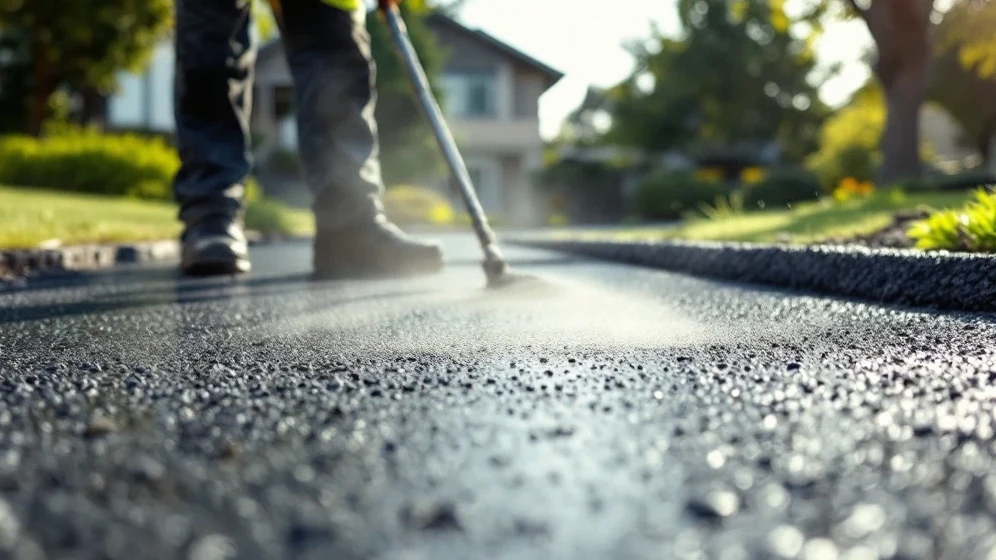
What is Driveway Paving and how does it work?
Driveway paving is the process of building a load-bearing surface over a compacted stone base so cars can sit on it for years without rutting. It starts with grading and drainage, then goes down in layers: crushed stone, binder asphalt, and a top coat.
A driveway is a structure, not a coating. The asphalt you see is the top inch and a half to two inches of a stack that starts below grade. Under it sits a compacted aggregate base, usually four to six inches of crushed stone, and under that is whatever soil your lot has. In Huntsville you will run into red clay in Madison, limestone shelves near Green Mountain, and sandy loam out toward Harvest. Each one changes how much stone we need and how we drain the site.
Huntsville Asphalt Paving installs driveways across Madison County, from Jones Valley to Meridianville, and the sequence is the same on every job: strip the old surface, fix the grade, compact the base, lay binder, lay top coat, roll it, and seal the edges. Cut any layer and the driveway tells on you within two or three summers.
The reason this matters is simple physics. Asphalt is flexible. It bends under load and springs back, but only if the stone underneath is uniform and dry. A soft spot in the base means the asphalt flexes farther than it can recover, and that is where you get a dip, a crack, or a rut that keeps coming back no matter how many times someone patches it.
Short version
- A driveway is layered: compacted stone base, binder course, top coat.
- Base prep and drainage decide how long the driveway lasts.
- Quality installation in Huntsville runs $3 to $7 per square foot. (huntsvilleasphaltpaving.com)
- An exact number requires an on-site look at your grade and soil.
How Driveway Paving works, start to finish
We measure the driveway, check the slope and where water goes, strip the old surface, grade and compact the base, then lay asphalt in two courses and roll it while it is still hot. A typical residential driveway takes one to three days on site, plus a few weeks of cure time before heavy loads.
The first visit is a walk of the property. We look at where the driveway meets the street, how the garage slab sits, and where stormwater runs during a hard summer thunderstorm. A driveway that sheds water toward the house is a problem no amount of asphalt will fix, so grade corrections happen before any paving starts.
Once the layout is set, we strip the existing surface. If it is old asphalt, we haul it off. If it is gravel, we regrade and add stone where it is thin. If it is concrete, we break it out, because asphalt laid over cracked concrete will mirror those cracks within a season.
Base prep is the part homeowners never see and the part that decides everything. We spread crushed stone in lifts, water it, and run a plate compactor or roller over each lift until it stops moving. On a driveway with a soft clay subgrade, we may need geotextile fabric to keep the stone from punching down into the mud. That fabric is not optional on some lots in Madison and Limestone County.
Asphalt arrives from the plant at roughly 275 to 300 degrees Fahrenheit. We lay the binder course first, usually two inches compacted, then the top course at an inch and a half. Both get rolled while hot. If the mix cools before it is rolled, the aggregate does not lock together properly and the surface stays porous.
Edges get special attention. We cut a clean vertical edge and butt it against the lawn or a concrete curb. A feathered edge, where the asphalt just thins out into the grass, crumbles within a year. Driveways that meet a concrete apron at the street get a clean joint there too, because that is where water and traffic stress concentrate.
- Walk the site.We check slope, drainage, soil, and how the driveway ties into the street and garage.
- Strip and grade.Old surface comes out, subgrade gets shaped so water runs away from the house.
- Build the base.Crushed stone goes down in lifts and gets compacted until it is hard and uniform.
- Lay binder and top coat.Two hot asphalt courses, rolled immediately so the aggregate locks in.
- Cure and seal.Wait a few weeks before parking heavy vehicles, then seal after the first season.
Why Driveway Paving matters for your home
A driveway is the first thing anyone sees when they pull up, and it is one of the few exterior features that affects both curb appeal and how easily you get in and out during a storm. A failing driveway also sends water toward your foundation, which is a much bigger bill than repaving.
Walk down any street in Blossomwood or Five Points and you can tell which driveways were built right. They hold a consistent crown, the edges are crisp, and there are no puddles after a rain. The ones that were rushed show alligator cracking, sunken tire tracks, and weeds pushing through the seams.
Drainage is the part that hits your wallet. When a driveway slopes toward the garage, water pools at the door and seeps under the slab. Fixing that means regrading and repaving, which is why we handle slope corrections during the initial build rather than patching later.
Alabama summers are hard on asphalt. Surface temps on a black driveway in July can push well past 140 degrees, and that softens the binder. A driveway with a solid base and the right mix design handles it. A thin overlay over a bad base turns into a rutted mess by August.
Resale matters. A cracked, weedy driveway signals deferred maintenance to a buyer, and it invites low offers. A clean, well-drained surface does the opposite. It is one of the cheaper exterior upgrades per dollar of visual impact.
Worth repaving now
- Alligator cracking across more than a quarter of the surface
- Sunken areas that hold water after rain
- Crumbling edges and exposed base stone
- Driveway slopes toward the garage or foundation
Can wait a season
- A few isolated hairline cracks
- Faded color with no structural damage
- Minor edge wear where tires leave the pavement
Common problems and what causes them
Most driveway problems trace back to water or base failure. Puddles, ruts, cracks, and sinking all start with drainage or compaction. Surface fixes like crack filler and sealcoat slow the damage but do not reverse it.
Alligator cracking, the web of interconnected cracks that looks like reptile skin, means the base under that spot has failed. Water got in, the stone shifted, and the asphalt above it is flexing past its limit. Filling those cracks is cosmetic. The fix is to cut out the failed section, rebuild the base, and repave that area.
Longitudinal cracks running the length of the driveway usually come from a seam between two paving passes or from the edge of an old concrete slab underneath. They open up because the two sides move at different rates. If the crack is wider than a quarter inch, water is already getting in.
Rutting happens in the wheel paths, and it has two causes. Either the asphalt is too soft for the summer heat, or the base is compressing under repeated load. On a driveway that carries only passenger cars, rutting usually points at the base.
Puddling at the garage door is the one that scares homeowners the most, and it should. Water that sits against the slab finds its way under it. We fix this by adjusting the grade so the driveway pitches away from the door, then repaving to that new slope.
Weeds and grass in the cracks are a symptom, not a cause. They grow where water and dirt have already collected. Pulling them does nothing. Sealing the crack after it is cleaned out is the only thing that stops them.
Hairline cracks
Normal aging. Keep them clean and seal the driveway when the surface starts to gray out.
Puddles and edge crumbling
Drainage or edge support is failing. Get it looked at before the next freeze cycle widens the damage.
Alligator cracking and sinking
Base failure. Patching will not hold. The section needs to be cut out and rebuilt.
What driveway paving costs in Huntsville
Typical Huntsville driveway paving projects run $3 to $7 per square foot for quality installation. A standard two-car driveway of about 600 square feet lands in the middle of that range. Larger driveways, steep grades, and full tear-outs push toward the upper end.
That per-square-foot number covers stripping, base prep, and two asphalt courses. It does not cover everything. If your driveway needs a new culvert, a retaining wall, or extensive grading to move water away from the house, those are separate line items and they can add thousands to the job.
A simple overlay over a sound existing surface costs less than a full tear-out, but only when the base is still good. On a driveway with alligator cracking or soft spots, an overlay is money thrown away. It will crack through in the same places within a year or two.
Driveway width matters more than most people realize. A single-car driveway at ten feet wide costs less per foot than a sixteen-foot double, obviously, but it also limits how you park. Most Huntsville homeowners end up wanting at least twelve feet so two cars can pass without one of them on the lawn.
Angi lists the top 10 best asphalt driveway pros in Huntsville, AL, which gives you a sense of how many options exist in the market. (angi.com) We would rather you compare a few quotes than take the first number you hear, including ours. AL Elite Asphalt offers free estimates and formal quotes for residential and commercial solutions in Huntsville, AL, and so do we. (aleliteasphaltpaving.com)
The only way to get an exact figure for your driveway is an on-site quote. Slope, soil, access, and how much of the old surface has to come out all change the number. A phone estimate is a guess. A site visit is a price.
Budget $3 to $7 per square foot for quality work, lean toward the upper end for tear-outs and steep grades, and get an on-site quote before you commit.
Best time of year to pave in Huntsville
Late spring through early fall is the sweet spot. Asphalt plants in Madison County run hot mix from roughly April into November, and the warm ground helps the new surface cure evenly. Summer heat is not a problem for installation, it is a problem for the asphalt after it is down if the mix is wrong.
Paving in cooler weather is possible, but the margin for error shrinks. The mix cools faster, which means less time to roll it and lock the aggregate. On a big driveway in December, a crew can lose the surface before they finish the last pass.
Spring rain is the other variable. You cannot pave over a saturated base. If the stone is holding water, we wait. That is why a job scheduled for a wet March might slide to April. It is not the crew being slow, it is the ground refusing to cooperate.
Sealcoat is different. The best window for sealing is late spring or early fall, when daytime temps stay above 60 degrees but the sun is not baking the surface. Sealing a brand new driveway too soon traps solvent in the asphalt and keeps it soft. Wait at least six months, ideally a full season.
Spring
Good for paving once the ground dries out. Watch for rain delays and saturated base stone.
Summer
Peak paving season. Hot mix flows well and cures fast. Sealcoat should wait for cooler weather.
Fall
Best window for sealcoat. Paving still works well through October and into November.
Winter
Paving is possible on mild days but risky. Most plants slow down and cold snaps shorten the work window.
Sources
Need asphalt paving in Huntsville? Get a free estimate today.
📞 256-472-9731