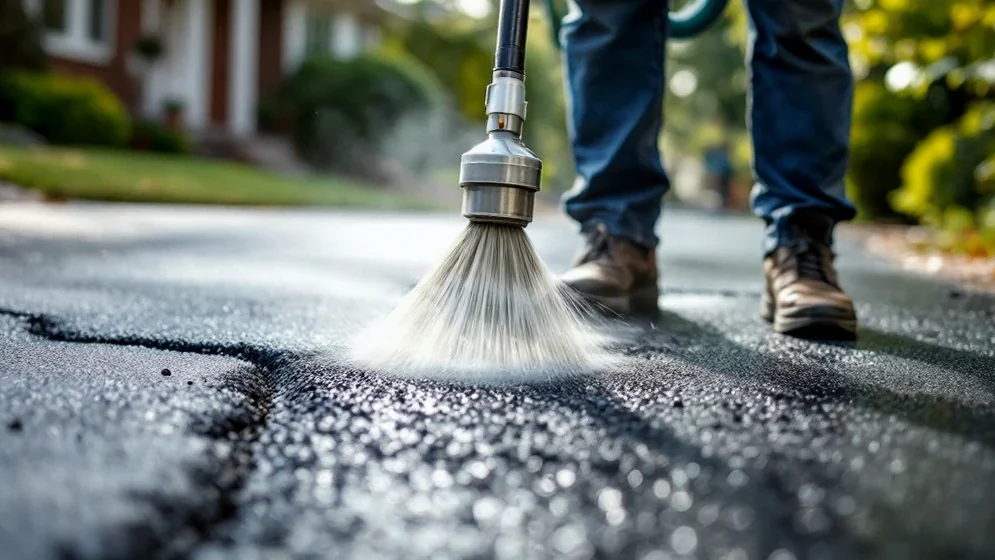
What is Asphalt Crack Sealing and how does it work?
Asphalt crack sealing is the process of cleaning out cracks in your driveway and filling them with a rubberized sealant that flexes with the pavement. It keeps water from getting underneath and turning small cracks into big problems.
Think of your driveway like a windshield. A tiny chip is annoying, but if you ignore it, a crack spreads across the whole thing. Same deal with asphalt. Water gets into any opening, freezes in the winter, expands, and makes the crack bigger. Then more water gets in, and pretty soon you've got a pothole.
Crack sealing is that cheap fix that stops the cycle. We clean out the crack, sometimes with a wire brush or compressed air, then fill it with a hot rubberized material. That goo is designed to stay flexible, so it moves with the pavement as the ground shifts and the temperature changes. It doesn't just sit there like a rigid plug that cracks out in a season.
We use a hot-applied rubberized asphalt, the same stuff used on highways. It's not the cold pour you buy in a bucket at the hardware store. That stuff works for tiny hairline cracks, but it doesn't have the same flexibility or lifespan. We heat it to around 400 degrees and apply it with a wand that forces it deep into the crack.
The goal is to seal the crack from top to bottom, not just smear a bead on the surface. If you only cover the top, water still finds its way in from the sides. That's why we take the time to clean the crack first. Loose dirt, old sealant, and plant roots all have to go, or the new material won't stick.
- Cleaning and filling cracks with a flexible, rubberized sealant
- Keeps water from getting under the asphalt and causing bigger damage
- A quick, low-cost fix compared to patching or repaving
- Best done before winter to avoid freeze-thaw damage
Short version
- Crack sealing is a preventive fix, not a cosmetic one.
- It works best on cracks wider than a pencil but before they turn into potholes.
- Rubberized material flexes, so it lasts through Huntsville's hot summers and cold snaps.
- Do it every few years to keep your driveway in shape.
How Asphalt Crack Sealing works, start to finish
The process is straightforward: clean the crack, fill it with hot rubberized sealant, and let it cool. But the details matter, and that's where our crews earn their keep.
First, we walk the whole driveway and mark every crack that needs attention. Not all cracks are the same. Hairline cracks might just need a surface treatment, while wider ones need a deeper fill. We also look for signs of bigger issues, like alligator cracking or a soft base, because sealing over those is a waste of money.
Next comes the cleaning. We use a combination of wire brushing and compressed air to get out loose debris. If the crack is full of dirt and grass, we might use a router to widen it slightly, which gives the sealant a clean edge to bond to. Routing also creates a reservoir so the sealant sits slightly below the surface, which means traffic doesn't wear it out as fast.
Then we heat the sealant in a melter. It's a lot like a giant crock pot on wheels. The material has to be hot enough to flow into the crack but not so hot that it burns. We apply it with a wand that has a shoe on the end, which presses the material into the crack and smooths it out as we go.
After the sealant is in, it needs time to cool. That's usually 15 to 30 minutes, depending on the weather. We'll block off the area with cones or caution tape so nobody drives on it while it's still soft. Once it's set, it's fine to drive on, but we recommend waiting a full day before any heavy traffic, like a parked car or a truck.
The whole job for a typical two-car driveway takes a few hours. We'll sweep up any loose debris and leave the place looking clean. You won't even notice the sealant unless you look close, because we match the color to the asphalt as best we can.
One thing we see a lot in Huntsville is people trying to do this themselves with a bucket of cold pour from the hardware store. That stuff works in a pinch for a season, but it doesn't have the flexibility of hot-applied rubberized sealant. It gets brittle in the winter and pops out in chunks. Then you're back to square one, and the crack is worse.
We've also seen crews that just blow the leaves out and call it clean. That's not enough. If the crack is packed with dirt, the sealant won't stick, and it'll fail within months. We take the time to do it right, because a redo is bad for you and bad for our reputation.
- Inspect and mark.We walk the driveway, note every crack, and check for signs of structural damage.
- Clean and prep.Wire brush, compressed air, and sometimes a router to give the sealant a clean edge.
- Heat and apply.Hot rubberized sealant is applied with a wand, pressed deep into the crack.
- Cool and cure.We block off the area until it's set, usually 15 to 30 minutes.
- Final sweep.We clean up, and you're good to go.
Why Asphalt Crack Sealing matters for your home
Crack sealing is the cheapest thing you can do to protect your driveway. It costs a fraction of a patching job, and it can add years to the life of your asphalt.
Your driveway takes a beating. Cars, trucks, the sun, and Huntsville's weather all work against it. Summers get hot enough to soften the asphalt, and winters bring enough freeze-thaw cycles to crack it. Water is the main threat, though. Once it gets under the surface, it washes out the base, and then you're looking at sinkholes and potholes.
Sealing cracks is like putting a bandage on a cut before it gets infected. It's a small effort that prevents a big problem. A crack that's a quarter-inch wide can turn into a pothole the size of a dinner plate within a year or two, especially if we get a wet spring.
We've seen driveways that were neglected for years. The cracks are full of grass, and the edges are crumbling. At that point, crack sealing isn't enough. You need patching or even a full repave. That's a lot more money. Regular crack sealing every couple of years is a whole lot cheaper than either of those.
There's also the look of the thing. A driveway full of spiderweb cracks makes your whole house look tired. Sealing them up makes a noticeable difference, and it's a quick win if you're thinking about selling. Buyers notice a clean, well-maintained driveway.
Now, crack sealing isn't a miracle fix. If your driveway has alligator cracking, which looks like reptile skin, or if there are areas that have sunk, sealing won't help. Those are signs of a failed base, and they need structural repair. But for the common straight cracks, edge cracks, and even some block cracks, sealing is the right call.
We get asked a lot if crack sealing is the same as sealcoating. They're different. Sealcoating is a thin protective layer over the whole surface, like sunscreen. Crack sealing is a targeted fix for specific openings. You can do both, and they work well together, but they solve different problems.
If you're in Huntsville and you're not sure whether your driveway needs crack sealing or something more, give us a call. We'll take a look and tell you straight what we'd recommend, even if it's just a patch job we can do in an afternoon.
Hairline cracks
Thin, less than 1/8 inch. Keep an eye on them, but they can wait a season.
Cracks wider than a pencil
These need sealing soon. Water is already getting in, and the edges are starting to crumble.
Alligator cracking or potholes
Sealing won't fix these. You need patching or repaving, and the longer you wait, the worse it gets.
Common problems and what causes them
Most cracks come from water, tree roots, or poor installation. Knowing the cause tells you whether sealing will help or if you're just covering up a bigger problem.
The most common crack we see in Huntsville is the edge crack. That's where the driveway meets the grass. It happens because the base underneath the edge isn't as solid as the center, and water runs off the lawn and under the asphalt. Over time, the edge sinks and cracks. Sealing these is important, but you also want to make sure your downspouts drain away from the driveway.
Tree roots are another big one. We have a lot of mature oaks and maples here, and their roots love the moisture under a driveway. They'll push up the asphalt, causing cracks that look like a spiderweb. Sealing those won't help because the root is still pushing. You might need to cut the root, but that's a job for an arborist, not us.
Then there's the driveway that was installed poorly in the first place. Maybe the base wasn't compacted enough, or the asphalt was laid too thin. That's when you get alligator cracking, which is a sign of structural failure. Sealing it is like putting makeup on a broken leg. It'll look fine for a minute, but it won't hold.
Weather plays a part too. Huntsville gets hot summers that soften the asphalt and cold snaps that make it brittle. That constant expansion and contraction creates stress cracks. They're usually straight and run across the driveway. Those are perfect candidates for sealing.
One thing that surprises people is that oil and gas leaks from cars can eat asphalt. If you park the same spot every day and see dark, soft spots, that's a chemical breakdown. Sealing over that won't work because the damage is deeper. You'd need to patch that area first.
We also see cracks that come from poor drainage. If water pools on the driveway and sits there, it seeps into the smallest opening and does its damage. That's why we always check the grading when we're out for a seal job. If we can fix the drainage, the sealant will last a lot longer.
- Edge cracks from water runoff and weak base
- Tree roots pushing up from below
- Alligator cracking from a failed base
- Stress cracks from temperature swings
- Oil and gas spills eating the asphalt
Sealing helps when
- Cracks are straight and less than half an inch wide
- Base is solid, no sinking or soft spots
- You catch it before water has washed out the base
- A driveway under 10 years old
Sealing won't help when
- You have alligator cracking
- There's standing water or potholes
- Asphalt crumbling at the edges
- Tree roots are actively pushing up
Frequently Asked Questions
How often should I get crack sealing done?
For most driveways, every two to three years is enough. If you have a lot of trees or heavy use, you might need it more often. The key is to catch cracks while they're still small. Once they turn into potholes, sealing won't help.
Can I do crack sealing myself?
You can buy a bucket of cold pour at the hardware store and fill in a hairline crack or two. But for anything wider than a pencil, it won't last. The hot rubberized material we use flexes and bonds better. Plus, we have the equipment to clean and route the crack properly.
How long does crack sealing last?
A good hot-applied rubberized sealant should last three to five years, sometimes longer if the driveway isn't subjected to heavy traffic or harsh weather. Cold pour from a bucket might last a year if you're lucky. The difference is in the material and the prep.
Will crack sealing fix potholes?
No. Potholes are a sign that the base underneath is compromised. Sealing the surface won't fix that. You need to patch the pothole, and if there are many, you might need a more extensive repair. We'll tell you if that's the case.
Does crack sealing work on all types of cracks?
It works on most straight cracks, edge cracks, and stress cracks. It doesn't work on alligator cracking or cracks caused by tree roots or a failed base. If the ground underneath is moving, the sealant will just crack again.
When is the best time of year for crack sealing in Huntsville?
Spring and fall are ideal. The temperature is mild, so the sealant cures properly. In the summer, the heat can make the material too soft, and in the winter, it can get brittle. We schedule most of our crack sealing jobs in April, May, September, and October.
How much does crack sealing cost?
It depends on the size of your driveway and the number of cracks. We give free estimates, and we'll walk the driveway with you and explain what we're going to do. It's always a lot less than patching or repaving.
Do I need to sealcoat after crack sealing?
It's a good idea. Crack sealing fixes the openings, and sealcoating protects the whole surface from sun and water damage. They work well together, but you don't have to do both at once. If your sealcoat is still in good shape, crack sealing alone is fine.
How long do I have to stay off the driveway after sealing?
You can walk on it as soon as it's tack-free, usually within 15 to 30 minutes. For driving, we recommend waiting at least a few hours, and overnight if you can. We'll put cones out to remind you, but it's best to plan around it.
What if my driveway is already in bad shape?
If you've got alligator cracking, potholes, or crumbling edges, crack sealing isn't the answer. We'll be straight with you about that. We can patch the bad spots, and if it's too far gone, we'll talk about repaving. Either way, you'll know where you stand.
Need asphalt paving in Huntsville? Get a free estimate today.
📞 256-472-9731